How solar panels and a photovoltaic installation work
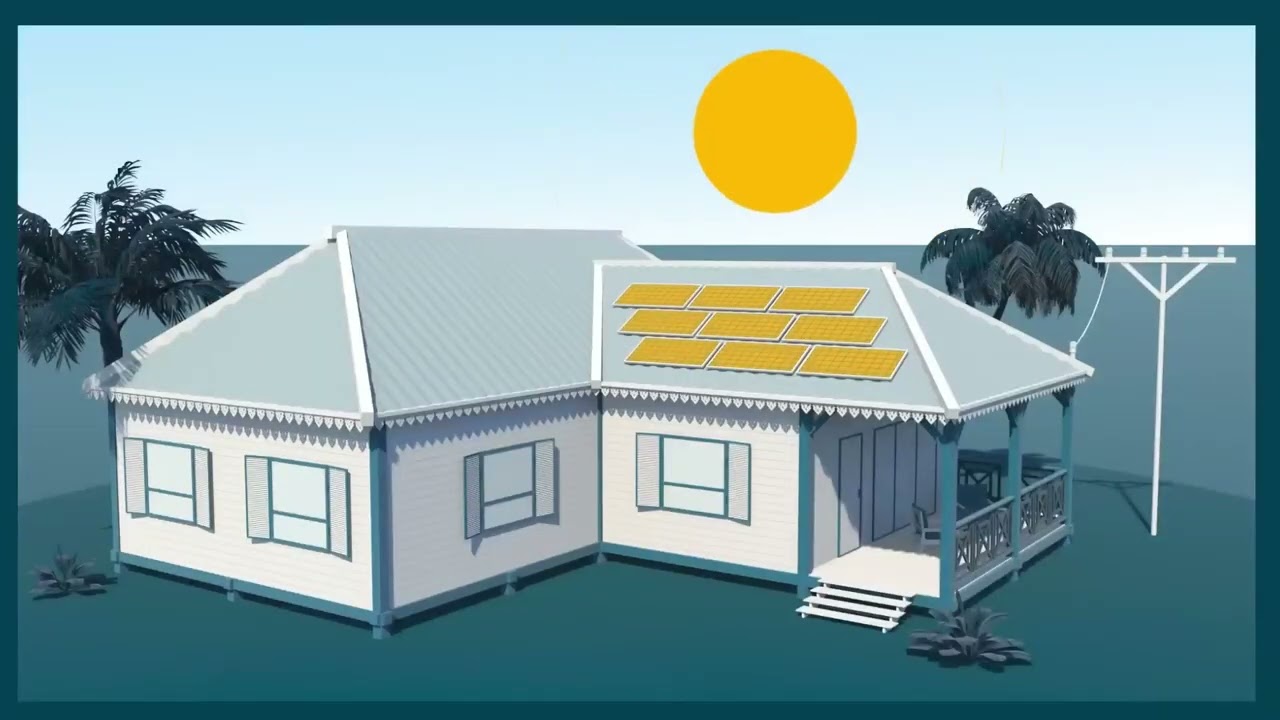
A photovoltaic installation is made up of various elements, the main components being the panels and the inverter. The panels are composed of photovoltaic cells that convert sunlight into direct current. The direct current is then converted into alternating current usable by your electrical appliances via the inverter.
Management and monitoring of your energy production
The inverter is connected to your electricity meter, itself connected to the general distribution network, in order to draw or inject electricity depending on your production and your self-consumption rate.
A monitoring system allows you to track and control the production and performance of your photovoltaic panels in real time, via smartphone, tablet or computer.
Note that it is light that is converted into electricity, not heat. Photovoltaic panels therefore work perfectly in a cold climate, but preferably away from shaded areas which significantly reduce their output.

The composition of a photovoltaic panel
A panel is made up of different layers stacked on top of each other. One of these layers is a set of photovoltaic cells in crystalline silicon, a semiconducting element that uses the energy of light photons to produce direct current.
Silicon is made from sand or quartz and can be 100% recycled. The photovoltaic cells are connected to each other by various elements such as copper or silver.
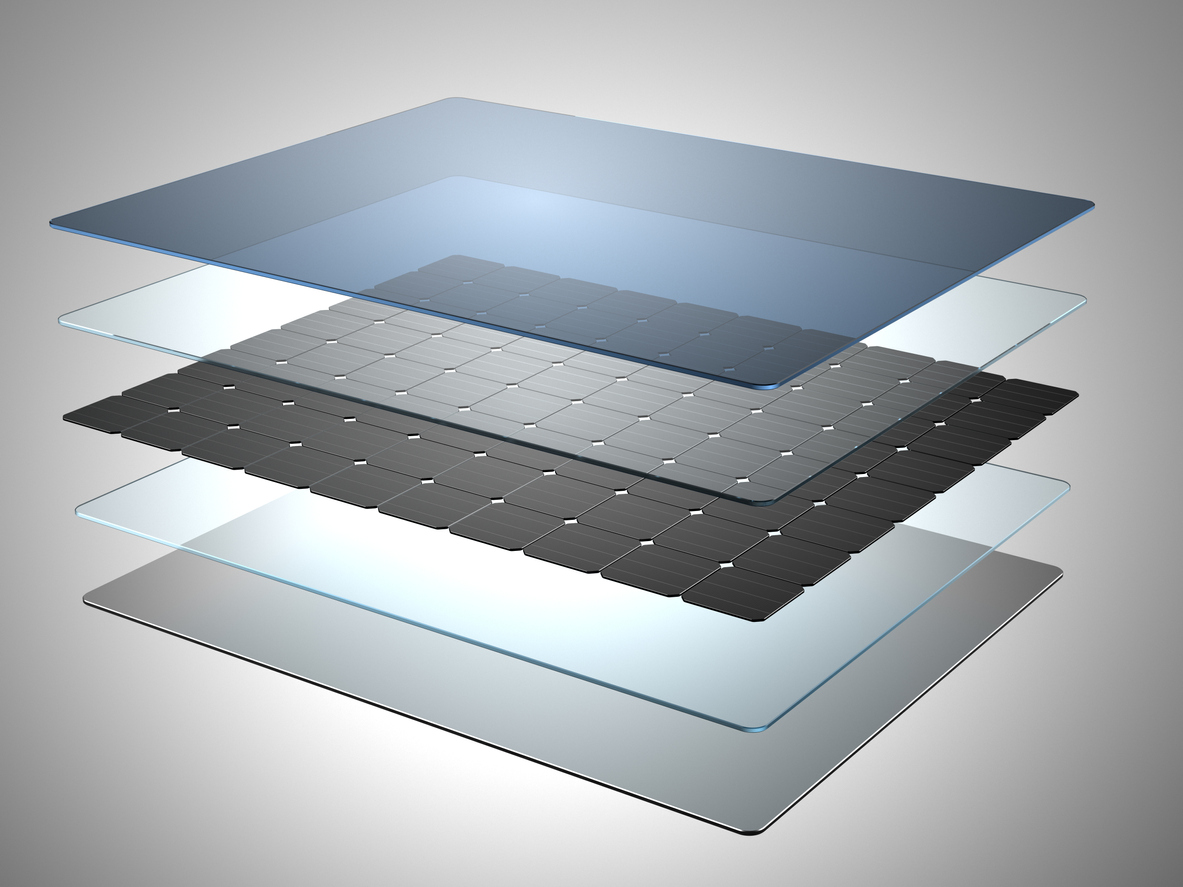
This layer of cells is encapsulated in an aluminium frame, glass plates and an electrical junction box, which allows the panel to be connected to the rest of the installation.
The essential component of your installation
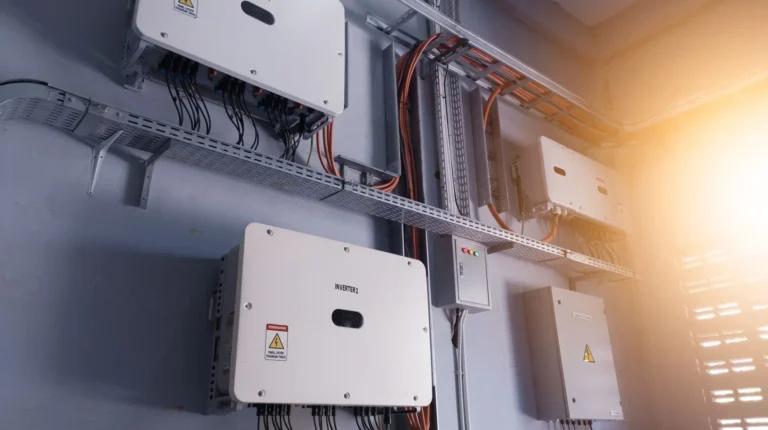
The inverter is the device that converts the direct current produced by your panels into alternating current compatible with your electrical appliances.
There are two types of inverters
Central inverters : The central inverter is placed near the electrical panel, in a well-ventilated location. It provides an overall overview of your installation's output.
Micro-inverters : These are placed directly beneath the photovoltaic panels. Slightly more expensive, they offer more precise monitoring of your installation's performance, panel by panel.
Key components of a photovoltaic installation

The electricity meter
It measures your electricity consumption. Its unit of measurement is the kilowatt-hour. Based on your consumption index, your supplier calculates your energy bill. Thanks to a photovoltaic installation, this index is reduced.
The distribution network
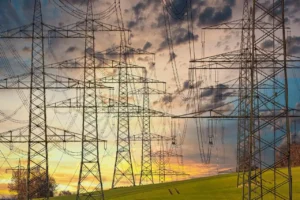
Electricity is produced and transported via high-voltage lines to the distribution network. Grid operators supply every locality, every neighbourhood and every home, and maintain the network in the event of a fault.

The monitoring system
Every photovoltaic installation has its own monitoring system. This allows you to analyse the output of your panels and track the performance of your installation in detail from your computer, smartphone or tablet.
Installation types for your solar panels
Pitched roof
The panels are placed on top of the roof using a rail structure fixed under the tiles by means of hooks, directly onto the frame. This is the most common installation in our regions.
Flat roof
Also very common in our regions, flat roof installation is ideal if you do not have a well-oriented sloped roof.
Ground installation
It is also possible to install panels on a ground-mounted structure. If you have a large plot of land, this is an ideal and easy option to set up.
Facade installation
Less conventional and not carried out by Neopower, facade installation can be an alternative in the case of a heavily shaded roof or lack of available space.
Panel strings and shading
Solar panels are often installed in series, commonly called "strings". A string consists of several panels connected to each other, forming a chain connected to the central inverter. It is the output of the weakest panel that determines the overall output of the string.
Shade is the main enemy of solar panels: shade on just one panel affects the entire chain. To remedy this, a thorough analysis of the building is carried out:
The technical constraints of the building are studied :
Roof type and slope, orientation, load capacity, electrical configuration, shading areas, available surface area.
A layout plan (panel arrangement) is produced :
In the event of shaded areas, optimisers or micro-inverters may be proposed so that each panel can operate individually if necessary.
Recycling a photovoltaic panel
The manufacture of photovoltaic panels does of course have an environmental impact, but this is reduced thanks to recycling. Today, nearly 94% of a photovoltaic panel is recyclable.
Since 2016, manufacturers and importers are required to take back panels free of charge at the end of their life, whether broken or defective. An eco-contribution of €4 per panel placed on the market finances the management of their recycling.
In Europe, the dismantling and recycling of photovoltaic panels has been handled by the PV Cycle association since 2007.
Convinced ? Join our community of self-producers !
Take the first step towards energy independence. Our experts guide you from A to Z in your solar project.